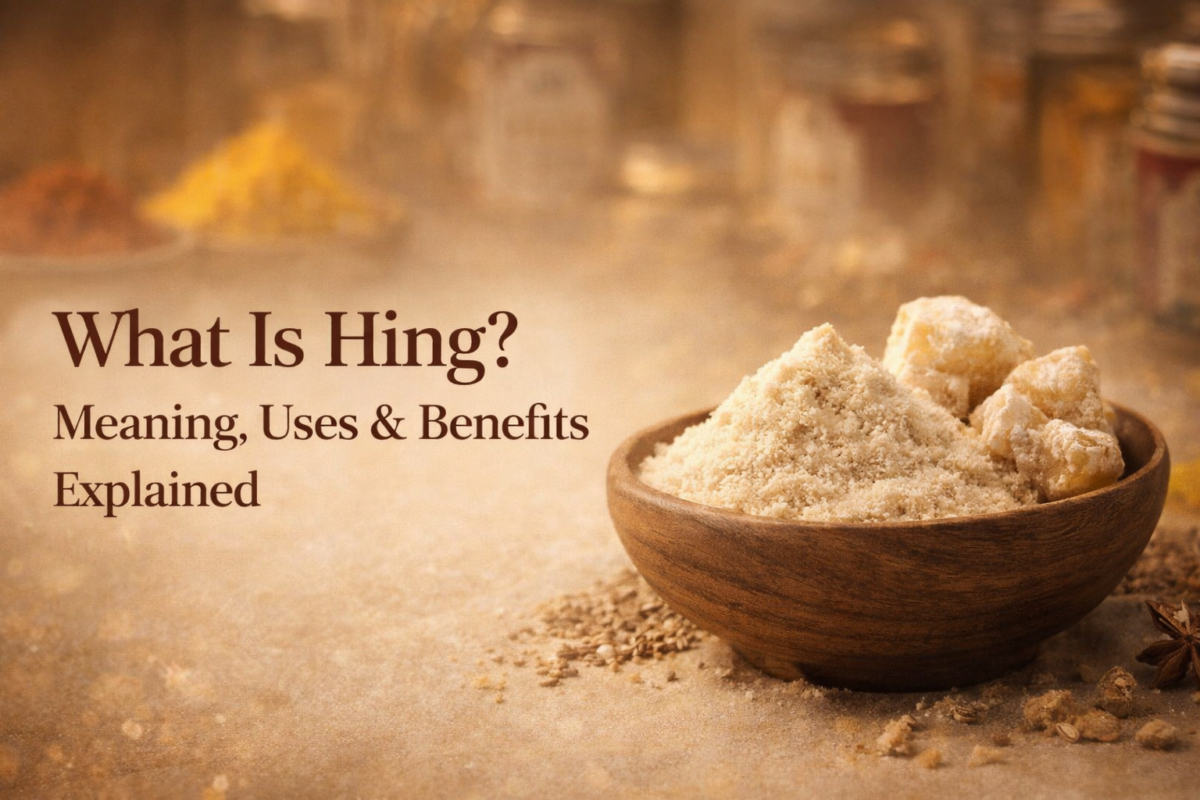




What Is Hing? Meaning, Uses & Benefits Explained
January 28, 2026
Pure Hing vs Adulterated Hing – How to Identify Fake Hing (Complete Buyer’s Guide)
February 19, 2026
Introduction
Most people use hing every day in dal, sabzi, kadhi, or tadka — but very few have ever seen the hing plant.
Is it a tree?
Is it a herb?
Does it grow in India?
Why is India one of the biggest consumers of hing, yet imports most of it?
The hing plant is one of the most fascinating spice plants in the world. It grows in extreme climates, takes years to mature, and produces resin only under very specific conditions.
In this detailed guide, we will explore:
Let’s uncover the real story behind this powerful spice.
- What the hing plant actually looks like
- Where it grows naturally
- Why doesn’t it easily grow in India?
- New Indian farming initiatives
- The future of hing cultivation
What Is the Hing Plant?
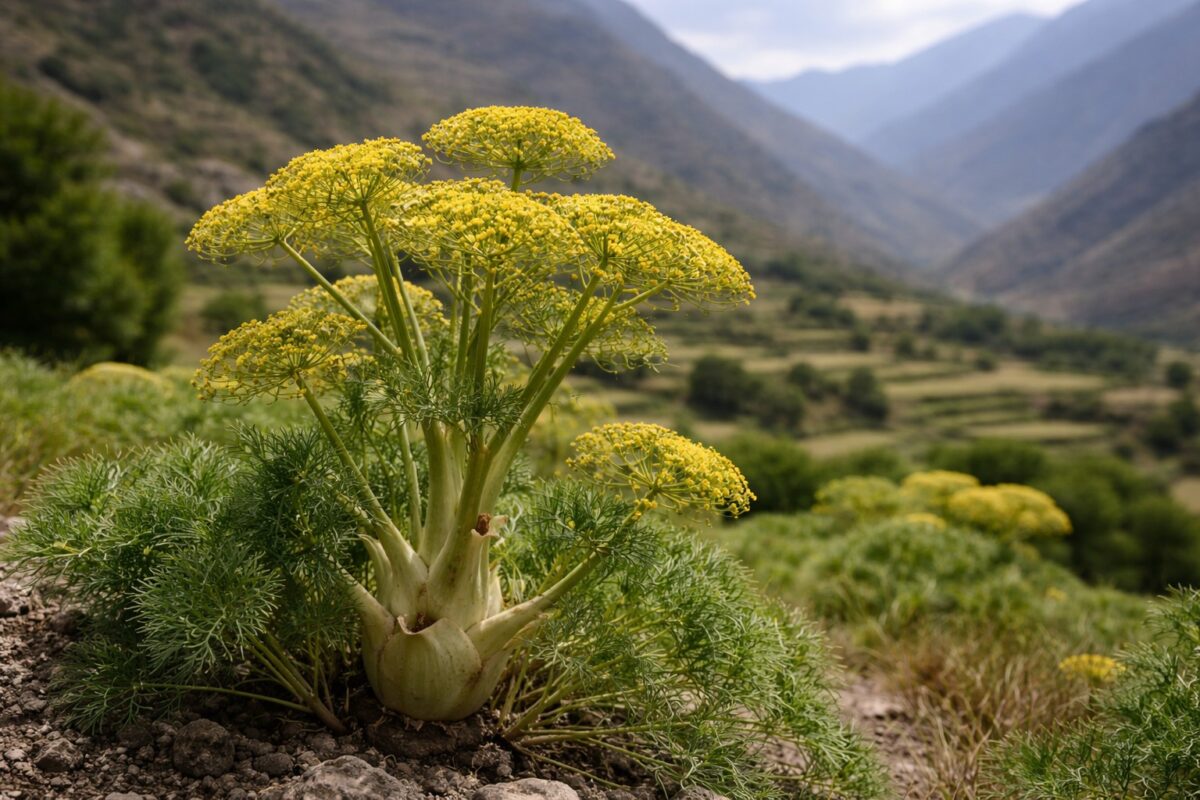
The hing plant belongs to the genus Ferula and the Apiaceae (carrot) family.
It is:
- A perennial herb (not a tree)
- 1.5 to 2 meters tall
- Thick-stemmed with umbrella-shaped yellow flowers
- Known for its large taproot (the most important part)
Many people search for “hing tree,” but technically it is not a tree. It is a hardy herb with a thick underground root system.
The resin used as hing comes from the taproot.
Scientific Classification of Hing Plant
- Botanical name: Ferula asafoetida
- Family: Apiaceae
- Common name: Asafoetida plant
- Hindi name: Hing ka paudha
This family also includes:
- Carrot
- Parsley
- Fennel
- Cumin
But unlike those spices, hing is extracted from root resin — not seeds.
Where Does the Hing Plant Grow Naturally?
The hing plant thrives in:
- Afghanistan
- Iran
- Turkmenistan
- Central Asia
It prefers:
- Cold desert climates
- Dry mountainous regions
- 600–2400 meters altitude
- Rocky, sandy soil
It cannot tolerate high humidity.
That is why India has historically imported most of its hing.
Why the Hing Plant Doesn’t Grow Easily in India.?
India consumes large quantities of hing — especially in:
- North Indian cuisine
- Jain food
- South Indian tadka
- Ayurvedic remedies
But traditional Indian climate conditions were not suitable for commercial hing farming.
Main challenges:
- High monsoon rainfall
- Humid tropical weather
- Different soil composition
- Temperature fluctuations
Hing plant requires dry, cold winters and low humidity.
That’s why cultivation attempts failed for decades.
Recent Hing Cultivation Success in India
In recent years, India has started growing hing successfully in:
- Himachal Pradesh
- Ladakh
- Lahaul-Spiti
These regions have:
- Cold desert-like conditions
- High altitude
- Low rainfall
- A similar environment to Afghanistan
The CSIR (Council of Scientific and Industrial Research) introduced Iranian hing seeds in India for experimental cultivation.
This is a major breakthrough for reducing hing imports.
How Long Does a Hing Plant Take to Produce Resin?
The plant needs:
- 4 to 5 years of growth
- Thick root development
- Maturity before harvesting
Farmers must wait patiently.
Once mature:
- The stem is cut
- Milky latex oozes out
- Resin is collected over several weeks
This slow production process is why pure hing is expensive.
What Does the Hing Plant Look Like?
The hing plant has:
- Tall green stems
- Feather-like leaves
- Umbrella-shaped yellow flower clusters
- Thick carrot-like taproot
From outside, it looks similar to fennel or dill plant — but the root system is massive and resin-rich.
When cut, the root releases a strong sulfur-like aroma.
Economic Importance of Hing Plant
India imports thousands of tons of hing annually.
If domestic cultivation expands:
- Import dependency will reduce
- Farmers in cold desert regions benefit
- Prices may stabilise
- Quality control may improve
This is why the future of hing farming in India is promising.
(Internal linking suggestion: Future of Hing Farming in India article)
Types of Hing Plants
Different species produce slightly different quality resin.
Major species:
- Ferula asafoetida
- Ferula foetida
- Ferula narthex
Afghan hing is considered high-grade due to resin richness.
Can Hing Plant Grow at Home?
Realistically, no.
Reasons:
- Requires cold desert climate
- Takes years to mature
- Needs specific soil conditions
- Difficult resin extraction
It is not like growing coriander or mint in kitchen garden.
Why Hing Farming Matters for Quality
Quality hing depends on:
- Plant maturity
- Climate conditions
- Resin concentration
- Harvesting technique
Immature plant = weaker aroma
Poor extraction = diluted resin
That’s why choosing a reliable brand matters.
(Internal link suggestion: SM Premium Pure Hing product page)
Future of Hing Plant in India
With climate-adapted farming:
- India may become self-sufficient
- Farmers in Ladakh & Himachal benefit
- Supply chain becomes stable
- Fresh resin-based products increase
Government-backed projects are already in progress.
This is an exciting shift in Indian spice agriculture.
Conclusion
The hing plant is one of the rarest and most climate-sensitive spice plants in the world.
It grows in harsh mountainous regions, takes years to mature, and produces resin only under precise conditions.
For decades, India relied on imports. But today, experimental cultivation in Himalayan regions is changing that story.
Understanding the hing plant helps you appreciate:
- Why is Hing expensive
- Why pure hing is rare
- Why quality matters
Next time you add a pinch of hing to your tadka, remember — it comes from a 5-year journey of a desert mountain plant.
FAQ Section
1. Is Hing a tree or a plant?
Hing comes from a perennial herb plant, not a tree.
2. Where does the hing plant grow?
Mainly in Afghanistan, Iran, and Central Asia.
3. Can hing grow in India?
Yes, recent successful cultivation has started in Himachal Pradesh and Ladakh.
4. Why is the hing plant rare?
Because it requires extreme cold desert conditions and takes 4–5 years to mature.
5. How is resin collected?
By cutting the mature root and collecting the latex that oozes out.
6. Why does hing smell so strong?
Due to sulfur compounds in the plant resin.